
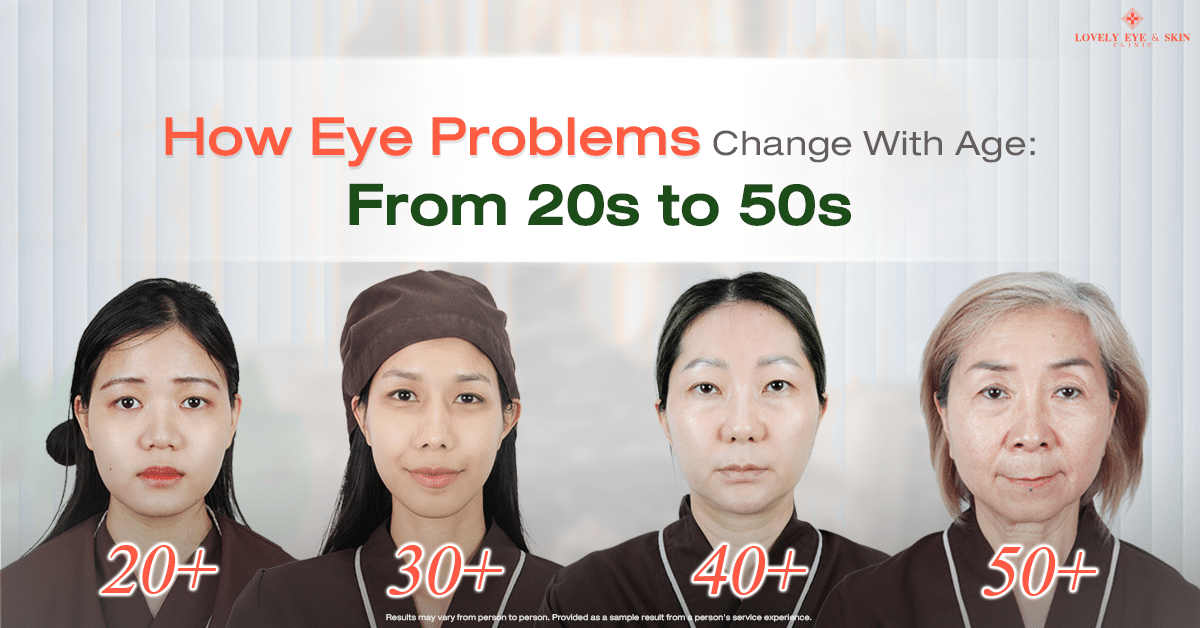
The eyes and surrounding skin naturally change over time, which means eye concerns can vary from person to person and across different stages of life. These may include less-defined eyelid creases, excess upper eyelid skin, drooping eyelids, or under-eye bags. However, age is not the only factor. Genetics, individual eye anatomy, changes in the tissues around the eyes, and everyday lifestyle habits can also influence how the eye area changes.
This article explores common eye-area concerns that may be noticed from your 20s through your 50s and beyond, how to recognize them, and the treatment options that may be considered based on each individual’s condition.
Factors That Affect Eye Problems at Different Ages
- Genetics and eye anatomy: Genetics can influence characteristics of the eye area, including fat distribution, excess eyelid skin, eyelid thickness, and the strength of surrounding tissues. These factors contribute to each person’s unique eye shape and appearance.
- Daily habits: Certain everyday behaviors may affect the skin around the eyes. Frequent eye rubbing can repeatedly create friction on the delicate eyelid skin and may contribute to visible fine lines. Insufficient sleep may also make puffiness and dark circles appear more noticeable.
- Environmental factors: Sun exposure and environmental pollution may contribute to the breakdown of collagen and elastin in the skin. As skin elasticity decreases, fine lines and sagging around the eyes may become more noticeable.
- Eyelid conditions: Some people may have eyelid-related conditions from birth, while others may develop them later in life. Examples include drooping eyelids, ptosis, and a hollow upper-eye appearance.
Common Eye Problems at Different Ages
- In Your 20s: Wanting a Defined Eyelid Crease While Still Being You

An ideal eyelid crease does not necessarily have to be large or dramatic. For many people in their 20s, the goal is simply to create a more defined crease that complements their natural eye structure while maintaining their individual appearance.
Treatment Options
Double eyelid surgery is one option for those who would like a more visible eyelid crease. The surgeon selects the appropriate technique based on each person’s eye anatomy.
If excess skin or fat is present, it may be addressed during the procedure. For some patients with thin eyelids and minimal excess skin or fat, a small-incision double eyelid technique such as Lovely No Stitch may be considered.
Before surgery, the doctor evaluates the existing eyelid crease, skin, fat distribution, and eyelid-opening function. The doctor will also assess whether an epicanthal fold or ptosis is present. Inner corner eye extension or ptosis surgery may be considered together with double eyelid surgery to create a treatment plan according to the patient’s anatomy and individual goals.
In Your 30s: Eyelid creases start to change, resulting in a tired-looking appearance

In your 30s, eyelid creases may appear smaller or less defined. Eye makeup may no longer look the same, and the eyes may appear more tired. At the same time, long hours of screen use, insufficient sleep, and having less time for self-care may also contribute to a tired appearance around the eyes.
If the eyes appear droopy or cannot open fully, a medical assessment can help determine whether the appearance is caused by excess eyelid skin covering the crease, true eyelid ptosis, or another factor. These conditions may look similar but have different causes and therefore require different treatment approaches.
Treatment Options
When the eyelid crease begins to change or the eyes appear droopy, the doctor will first determine whether the concern is caused by a lower-than-normal eyelid margin or excess upper eyelid skin covering the crease, as these conditions require different approaches.
If eyelid ptosis related to the eyelid-elevating muscle or tendon is identified, the doctor may consider surgery to adjust levator muscle. Double eyelid surgery may also be performed for patients who would like to modify their eyelid crease.
For patients with an epicanthal fold covering the inner corner of the eye, inner corner eye extension surgery may be considered to adjust the eye shape.
For those who like their existing eyelid crease but have excess skin toward the outer eyelid, the doctor may consider a sub brow lift with eyelid crease adjustment when appropriate. If there is only mild skin laxity around the eyes and surgery is not currently desired, Lovely Eye Reborn may be another option for improving the appearance and firmness of the skin around the eyes. It generally requires less recovery time than surgical procedures.
In Your 40s: Sagging eyelids, difficult to apply eye makeup
Before choosing a treatment, it is important to identify concern.

In your 40s, the upper eyelid skin may begin to sag and cover part of the eyelid crease, making a previously visible crease appear smaller. Eyeshadow may become hidden within the fold, and eyeliner may become more difficult to apply. Fine lines around the eyes and under-eye bags may also become more noticeable, making the eyes appear more tired.
Treatment Options
In your 40s, several eye problems may occur at the same time. The doctor may therefore assess the eyelid crease, eyelid-opening function, inner corners of the eyes, and under-eye area before developing an individualized surgical plan.
In the example case shown, the doctor planned four procedures together: double eyelid surgery, eyelid-elevating muscle adjustment, epicanthoplasty, and lower blepharoplasty. Each procedure addressed a different concern identified during the assessment. However, patients with a similar appearance do not necessarily require all four procedures. The appropriate treatment plan depends on the individual examination and eye anatomy.
After surgery, patients who would like to continue caring for skin firmness around the eyes may consider Lovely Eye Reborn, depending on their skin condition and suitability. The appropriate timing for starting an eye-area treatment after surgery should be discussed with the doctor.
In Your 50s: Looking Beyond the Eyelid Crease
Eyelid skin, eyelid crease, and eyelid function should be evaluated together.

In your 50s and beyond, several changes around the eyes may become noticeable at the same time. Upper eyelid skin may sag and cover the eyelid crease, making the crease appear smaller and eye makeup more difficult to apply.
Some people may also notice drooping eyelids, a hollow upper-eye appearance, or more prominent under-eye bags. In cases of significant excess upper eyelid skin, part of the visual field may also be affected.
Although these concerns can appear similar, they may have different causes. Excess or sagging eyelid skin refers to skin that folds downward and covers the eyelid crease, whereas eyelid ptosis refers to the eyelid margin sitting lower than normal. This may be related to function of the upper eyelid muscle.
The lower eyelid can also change over time. Some people develop prominent under-eye bags due to protruding fat, while others may have loose under-eye skin or reduced lower eyelid support. For this reason, the doctor should evaluate the upper eyelids, eyelid-opening function, eye socket area, and lower eyelids together to identify the underlying causes and develop an appropriate treatment plan.
Treatment Options
Eye-area concerns may involve several structures at the same time. The doctor will therefore assess whether upper eyelid drooping is caused primarily by excess skin or eyelid ptosis, as well as examine the eye socket, under-eye bags, and firmness of the lower eyelid.
If excess upper eyelid skin is covering the eyelid crease, double eyelid surgery with excess skin removal may be considered.
If ptosis related to muscle that lifting upper eyelid is present, ptosis surgery should combine with double eyelid surgery. For patients with a hollow upper-eye appearance, fat grafting may be considered when appropriate.
For the lower eyelids, lower blepharoplasty may be considered when prominent under-eye bags are present. If laxity of the structures supporting the lower eyelid is also identified, the doctor may consider tightening or repositioning the lower eyelid during the same surgical session.
Some patients may benefit from a combination of procedures depending on their examination findings and individual eye anatomy.
Can People Over 50 Have Double Eyelid Surgery?
Yes. Double eyelid surgery can be considered for people over 50. However, the doctor will evaluate overall health, underlying medical conditions, eye-area anatomy, eyelid muscle function, fat distribution, excess skin, and any other concerns that may be present before developing an appropriate surgical plan with safety in mind.
This is particularly important because eyelid skin and surrounding tissues may change more noticeably with age. Skin elasticity may decrease, excess skin may become more prominent, and fat distribution around the eyelids may also change.
What factors should be evaluated before double eyelid surgery?
- The existing eyelid creases on both sides — including their shape, height, and symmetry.
- Upper eyelid skin and fat — whether excess skin or fat is present and whether it may need to be addressed during surgery.
- Eyelid-opening function — whether the eyelid margins are at an appropriate level and how the eyelid-elevating muscles function.
- Eyebrow position and alignment — to assess whether eyebrow position or sagging skin contributes to changes in the eyelid crease.
- The inner eye corners and upper eyelid volume — including the presence of an epicanthal fold or a hollow upper-eye appearance.
- Eye health and medical history — including dry eye symptoms, underlying medical conditions, medications, supplements, and previous eye surgery.
Summary
The appearance and structure of the eye area can change throughout different stages of life. In your 20s, concerns may focus more on hidden or poorly defined eyelid creases. As you get older, excess eyelid skin, drooping eyelids, under-eye bags, or hollowing around the eyes may become more noticeable.
However, age alone does not determine which concerns will develop. Individual eye anatomy, genetics, tissue changes, and lifestyle factors can all influence how the eye area changes over time.
If you are unsure whether your concern is related to excess skin, eyelid-elevating muscle function, or another aspect of the eye-area anatomy, you can consult the Lovely Specialists at Lovely Eye & Skin Clinic for an assessment and an individualized treatment plan.
Frequently-Asked Questions (FAQ)
Q: At what age do eye problems usually begin?
A: Eye-area concerns can occur at any age. Their causes may range from genetics and individual eye anatomy to age-related changes in the skin and surrounding tissues. If you notice an unusual change or symptoms affecting your eyes or eyelids, it is advisable to consult a doctor for an assessment and appropriate treatment planning.
Q: What is the difference between drooping eyelids and weakness of the eyelid muscles?
A: A drooping appearance can have different causes. Excess or sagging upper eyelid skin may fold over the eyelid crease, while dysfunction of the muscles or structures responsible for lifting the eyelid can cause the eyelid margin to sit lower than normal and make the eyes appear droopy or partially closed.
These conditions may seem similar, but require different treatment approaches. Therefore, medical consultation is recommended to identify the underlying cause.
Q: What is the difference between sagging eyelid skin and ptosis?
A: Sagging eyelid skin refers to excess upper eyelid skin that folds downward and covers part of the eyelid crease. On the other hand, ptosis may be associated with weakness or dysfunction of the muscle that lifts the upper eyelid. This makes the eyes appear droopy. Before choosing treatment options, both factors should be evaluated by an ophthalmologist.
Q: If I have drooping eyelids, can I have double eyelid surgery alone?
A: It depends on the underlying cause of each individual. If the main concern is excess upper eyelid skin covering the eyelid crease, double eyelid surgery may be considered. It will remove excess skin to create more defined creases.
If the droopy appearance is also related to dysfunction of the upper eyelid muscle, the doctor may recommend ptosis surgery. In addition, patients who also have excess skin covering the inner corner of the eyes, inner corner eye extension may be considered.


